

Chasing Cosmic Dragons: The DWARF Vision Guide to Comets
Learn all about these fleeting gems with my field notes on chasing comets A6 (Lemmon), R2 (SWAN), and Tsuchinshan-ATLAS, plus pro-tips for capturing your own.

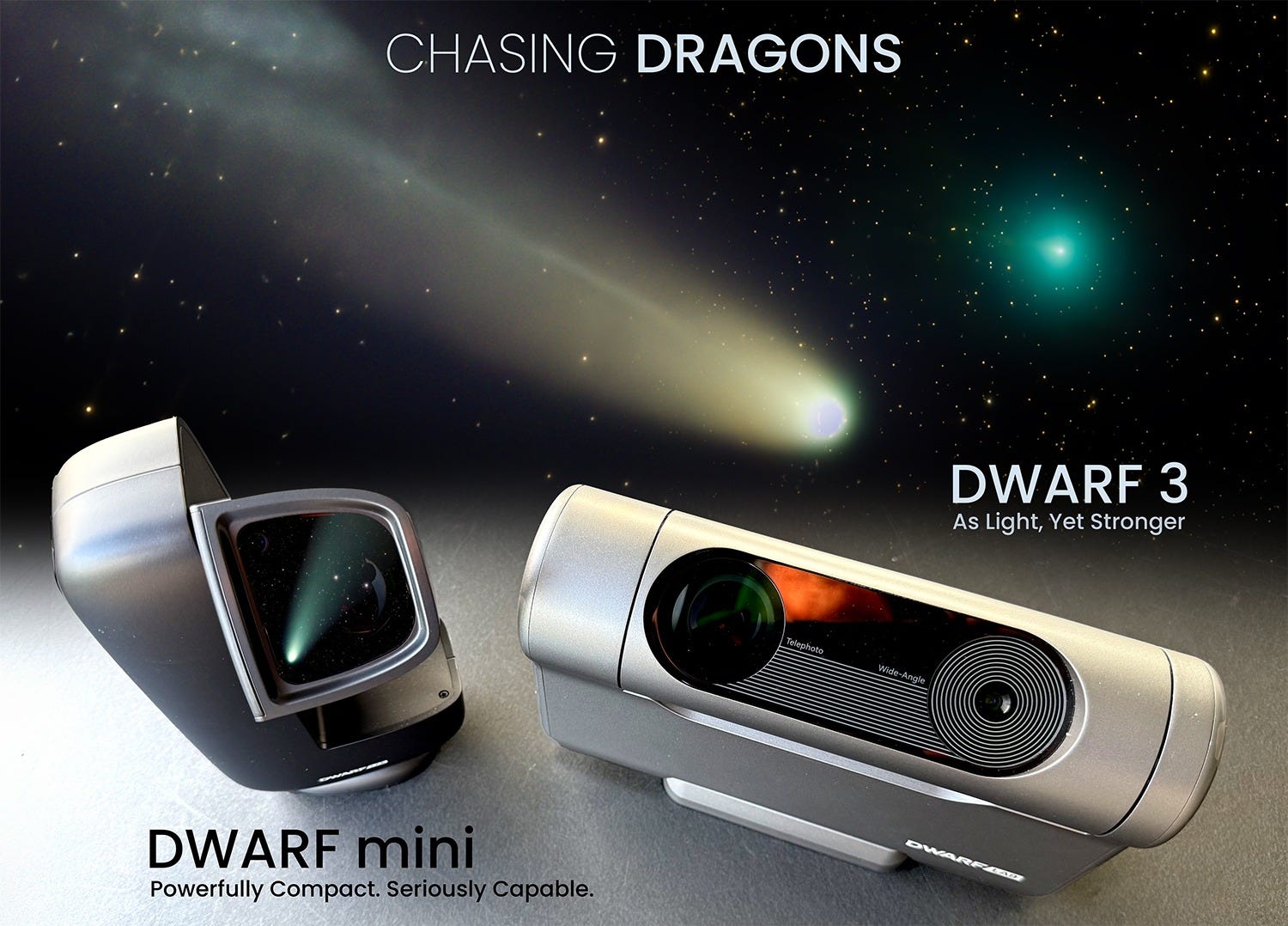
What a few months it’s been for DWARF-wranglers! Comets are notoriously tricky targets—they’re faint, they’re fuzzy, and worst of all, they move.
I’ve been glued to my scopes, hunting down these cosmic ghosts, and the results have been mind-blowing. Let’s look at what we’ve bagged.
SCOPE CORNER: Get Your Own Dwarf!
Get your own cosmic dragon hunter! Please use our links to order your DWARF Scopes here. The D3 is available now, or Pre-Order your DWARF mini (shipping to start in December 2025).
The Portrait of a Cosmic Dragon: C/2025 A6 (Lemmon)
Before we get to the pictures, we have to talk about this comet. When I first spotted it in early October, it was a pretty, well-behaved, blue-green coma.
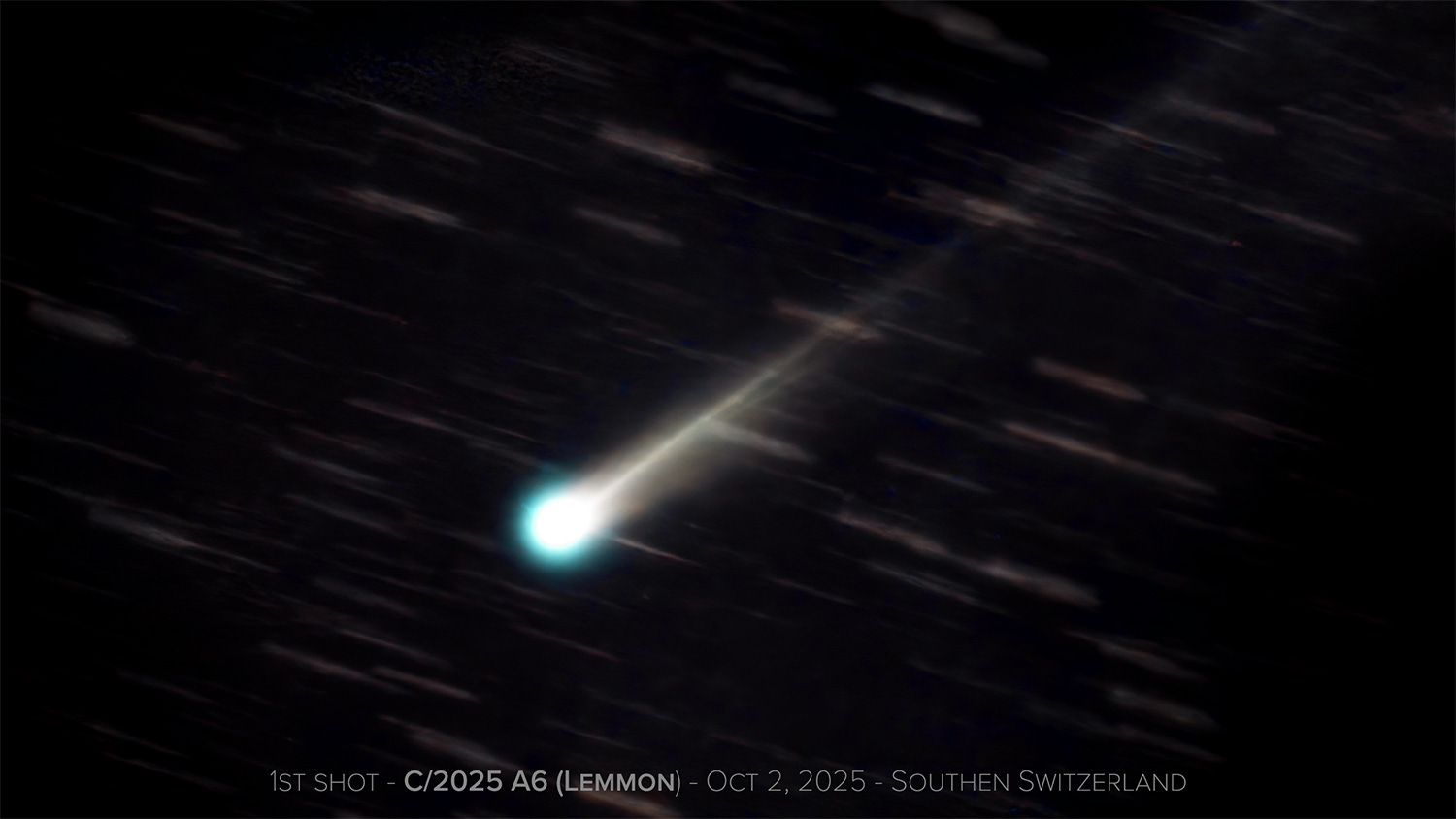
C/2025 A6 (Lemmon): The “First Shot”
This was my very first look at A6 (Lemmon) on October 2nd, and right away, I knew it was special. Already, both the ion and dust tails were clearly defined, and that brightly glowing blue-green coma signaled that this one could put on a show, and it did!
Then, it just... woke up.
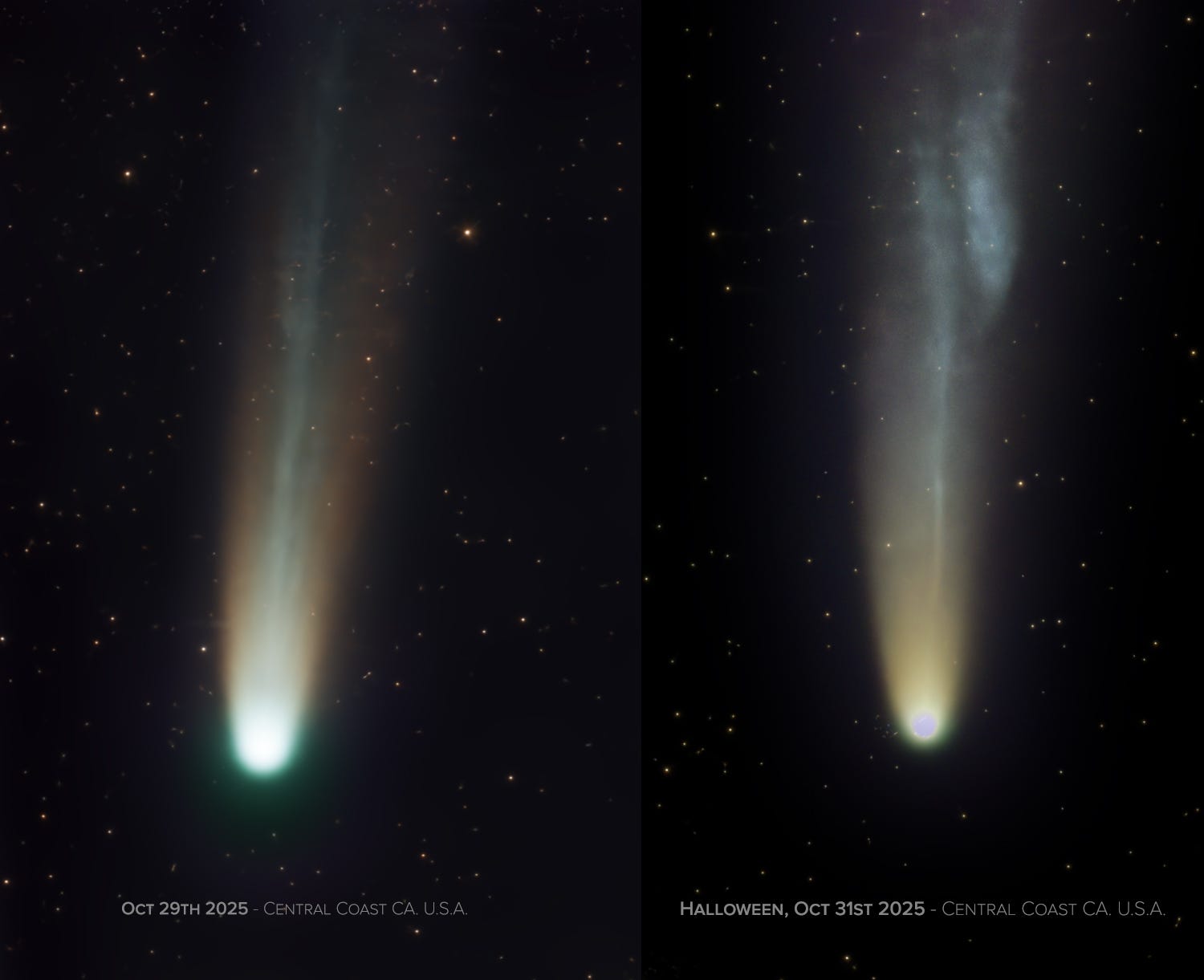
As it approached the sun, C/2025 A6 (Lemmon) put on one of the most dynamic shows we’ve seen in years. This isn’t just a static, fuzzy blob; it’s a living, breathing dragon.
Astronomers (and our fellow DWARF-wranglers!) have been reporting constant, dramatic fluctuations:
Violent Outbursts: The comet would suddenly flare in brightness, looking completely different from one night to the next.
Twisted Ion Tails: The solar wind has been ripping through the comet’s tail, twisting it into complex knots, clumps, and streamers.
Disconnection Events: We’ve literally seen the solar wind sever the comet’s ion tail, only for it to grow a new one.
This comet has been special because it’s so active. It’s reminded us that comets aren’t just objects; they are active, chaotic events unfolding right in front of us. Capturing it has been less like photographing a mountain and more like photographing a waterfall—a moment of beautiful violence, frozen in time.
The Anatomy of a Comet
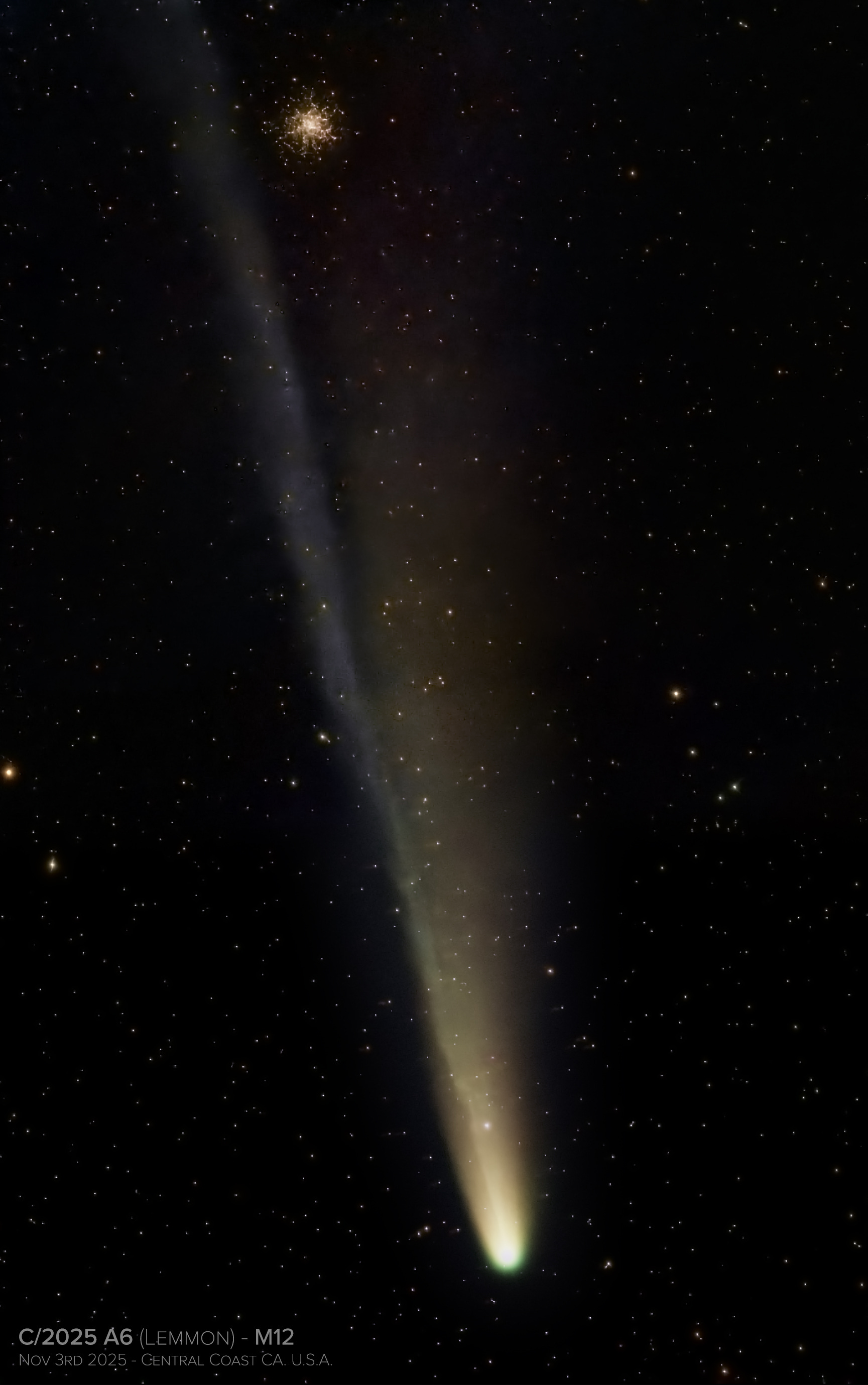
Here’s the anatomy of a celestial visitor. The comet’s head glows with a distinctive greenish-teal coma, a stunning atmosphere of carbon gas energized by the Sun. From this glowing core, two separate tails extend across space.
The Dust Tail (The Broad Fan): The first is the broad fan of the dust tail, reflecting sunlight as it’s pushed gently through the solar system.
The Ion Tail (The Sculpted Blue Glow): The second is a faint, straight ion tail that carries that same distinct blue-green glow as it’s sculpted directly by the solar wind.
Intermission: Capturing Your Own Comet Shots
Our planning and field guide tips & tricks for managing your Dwarf to get the best experience from the cosmic dragon show - view online or download:

You Got The Data! How to Process a Moving Target
You’ve captured your data. You open the image on your DWARF, and your comet is a blurry streak! What happened? The comet moved against the stars!
So, how do you get a sharp comet and sharp stars?
You need a special workflow. You have to stack the images twice — once for the comet and once for the stars — and then combine them. It’s the magic trick that unlocks all the pictures you see in this post.
We’ve written the definitive guide on how to do it in SIRIL:

C/2025 R2 (SWAN): The Ethereal Ghost
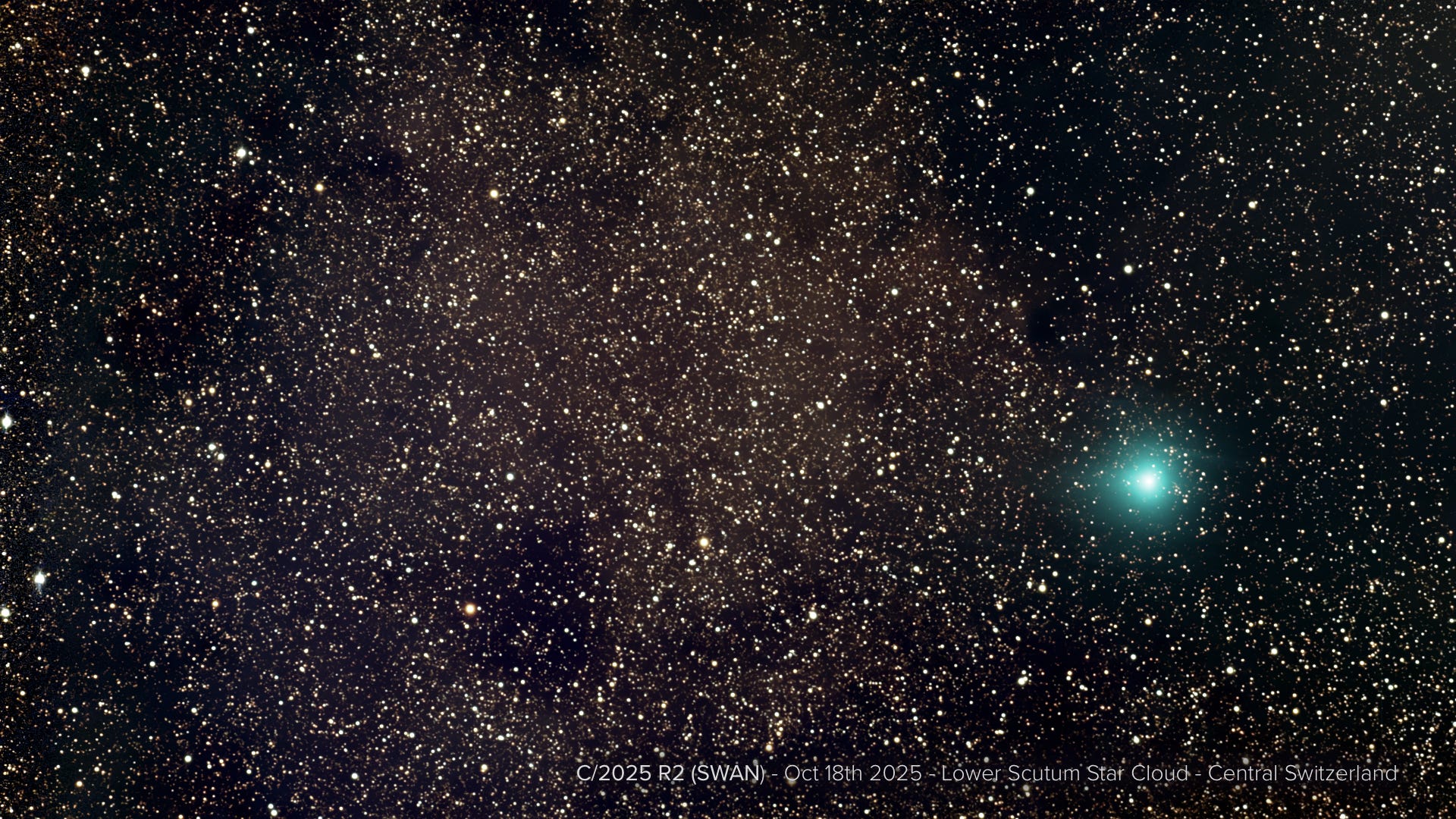
If A6 (Lemmon) was a “dragon,” R2 (SWAN) is a “ghost.” This comet is the perfect counterpart. Observer reports and our own images showed it was all about its coma. It had a massive, beautiful, blue-green atmosphere but a very weak, faint, or “stubby” tail.
This is a classic “gas-heavy” comet, shining with a cyanogen glow from fluorescence, not a “dust-heavy” comet that reflects sunlight. This made it a challenging target—its light was spread out over a considerable area (some estimated its coma at 10-15 arc minutes, half the width of the full moon!), making it look faint and ethereal. Capturing that diffuse, ghostly glow was the real prize.
What I love about this shot is the context—that ghostly green coma floating in the ridiculously dense Lower Scutum Star Cloud. It’s a testament to the DWARF 3’s ability to pull faint fuzzies out of a bright, busy star field:
C/2023 A3 (Tsuchinshan-ATLAS): Unlocking Hidden Colors in Year-Old Data
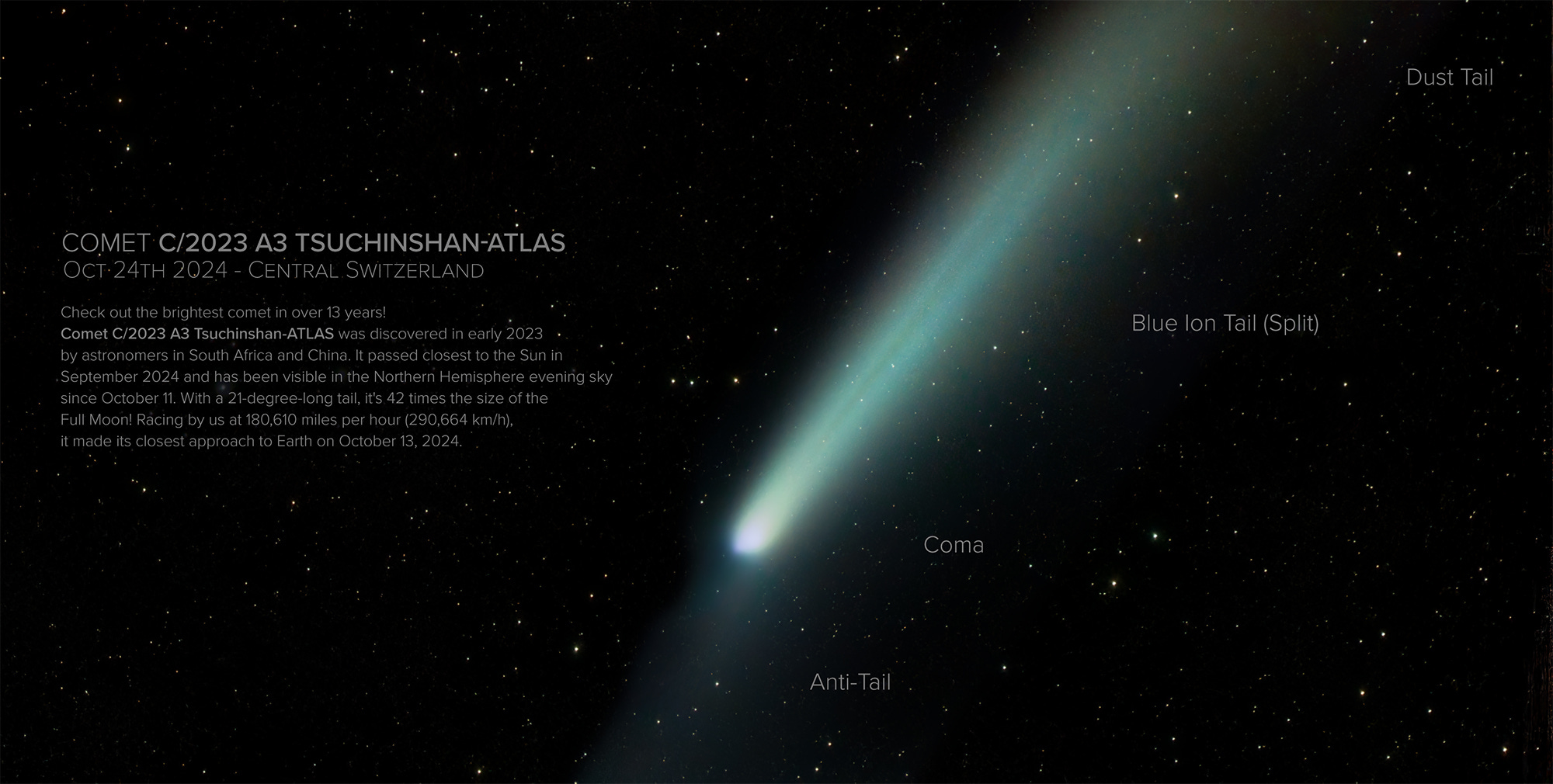
This one is special. Let’s look back at the “Great Comet of 2024.” This was the event everyone was imagining. Observers were captivated by its brilliant, complex dust tail, the classic green coma, and at just the right time, an odd, sunward-facing “anti-tail” that poked out from the front of the coma.
But astrophotographers with high-end gear knew there was a second, fainter prize: a delicate, fantastic blue ion tail that was often lost in the glare of the main dust tail.
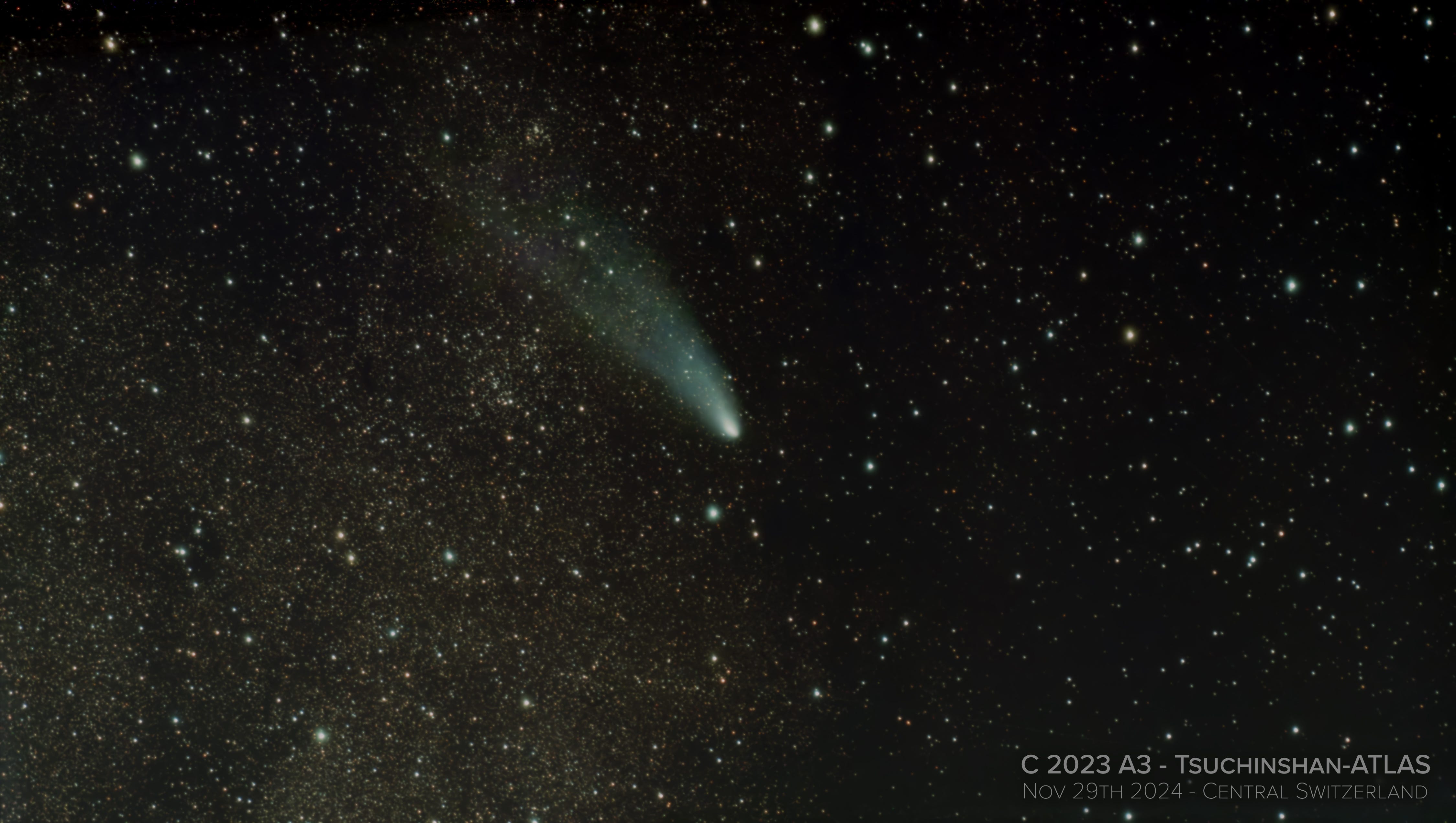
At the time, my processing skills weren’t what they are now. Looking back at my data from late November 2024, I knew there was more hiding in that file.
This is a perfect example of why our processing skills are so crucial. I took that year-old data and re-processed it using everything I’ve learned, especially our new Photoshop workflow with RC Astro tools like StarXterminator, NoiseXterminator, and StarShrink.
The result? I was able to recover that incredible, faint blue split ion tail and make it pop—a detail that was utterly lost in my original version. It’s fantastic to see what’s hiding in our old data, just waiting for the proper techniques!
Now, in late 2025, it’s a faint ghost (around 16th magnitude) in the constellation Ophiuchus, speeding out of our solar system on an “ejection trajectory.” This isn’t just a long-period comet; it’s a one-time visitor. We are witnessing its final farewell as it leaves us, likely to spend the next 80,000 years —or perhaps eternity —wandering interstellar space. This image, taken as it began its journey into the dark, is our final look at this incredible visitor.
Want to Try This Yourself?
Upgrade to the DwarfVision CREW!
This kind of processing is the single biggest leap you can take in your astrophotography. Our free guides get you started, but our Pro guides for CREW members are where we share the advanced workflows that produced this exact shot.
When you upgrade, you don’t just support the community—you get the keys to Mission Control.
The DSO Data Club: Get access to our exclusive, curated library of DWARF data sets. Data from our DWARF mini test unit will be available soon, and CREW members will be the first to receive it. You’ll be able to download our data—including data on comets A6 Lemmon and R2 Swan —and practice these very techniques.
Advanced “Pro” Guides: Unlock our complete library of advanced tutorials on SIRIL, Photoshop, and those game-changing RC Astro tools.
Sky Events: When we see an incredible event on the horizon, we will email you all the details so you won’t miss the chance for that epic shot!
Stop just collecting data and start creating masterpieces!