

DwarfVision Sky Guide: Current Astro Events for Smart Telescopes
Late June edition! Tracking transient events, planetary pairings, and the raw astrophysics of a dying supergiant.

Now that the Summer Solstice is officially behind us, the celestial mechanics of the year begin to shift. Daylight will slowly get shorter, and the nights will stretch longer as we move deeper into the season. The iconic summer constellations are rising, and the glowing, dense core of the Milky Way is now positioned directly overhead around 2:00 AM.
Open the FULL SKYGUIDE Experience in your browser HERE.
Hey Dwarfer’s, it’s our SOLSTICE NIGHTS SALE!
Jump on board with a paid subscription and get all the CREW perks, such as our exclusive processing & SIRIL docs, plus immediate access to our DATACLUB growing library of ready-to-use images, data, tips & tricks, guides, and more! NOW 20% OFF the Year Price!
The sky is transitioning, and our Sentinel network is up and running! We’re watching the Sky for the latest Events. Before we dive into a major community breakthrough, here is your tactical flight plan for the rest of June. Set your alarms, prepare your power banks, and secure a clear view of the horizon:
The Sky Ahead: June 23rd to July 4th
Late June: The Post-Solstice Glow (Noctilucent Clouds)
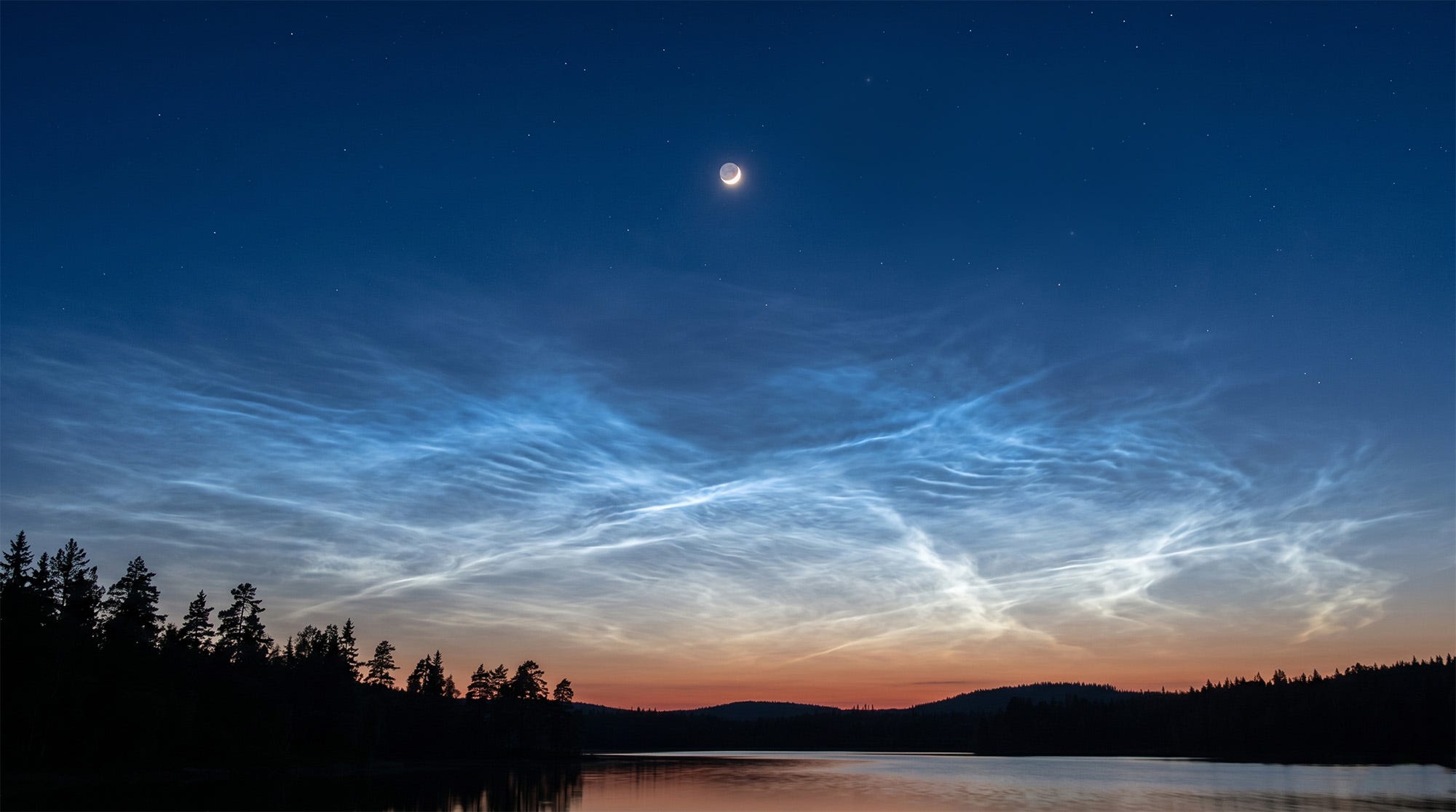
Crossing the solstice, we have entered prime time for Noctilucent Clouds in the Northern Hemisphere. These ultra-high-altitude ice crystals form from ancient meteor smoke trails and glow a ghostly electric blue against the twilight.
To see this, look north 90 to 120 minutes after sunset. Point your scope low toward the northern horizon using the Wide View timelapse mode or Milky Way Mode (use Gemini stars as targets) and let it run to capture this rippling sea of glowing ice on the edge of space.
June 25–26: The Blaze Star Maximum Alert
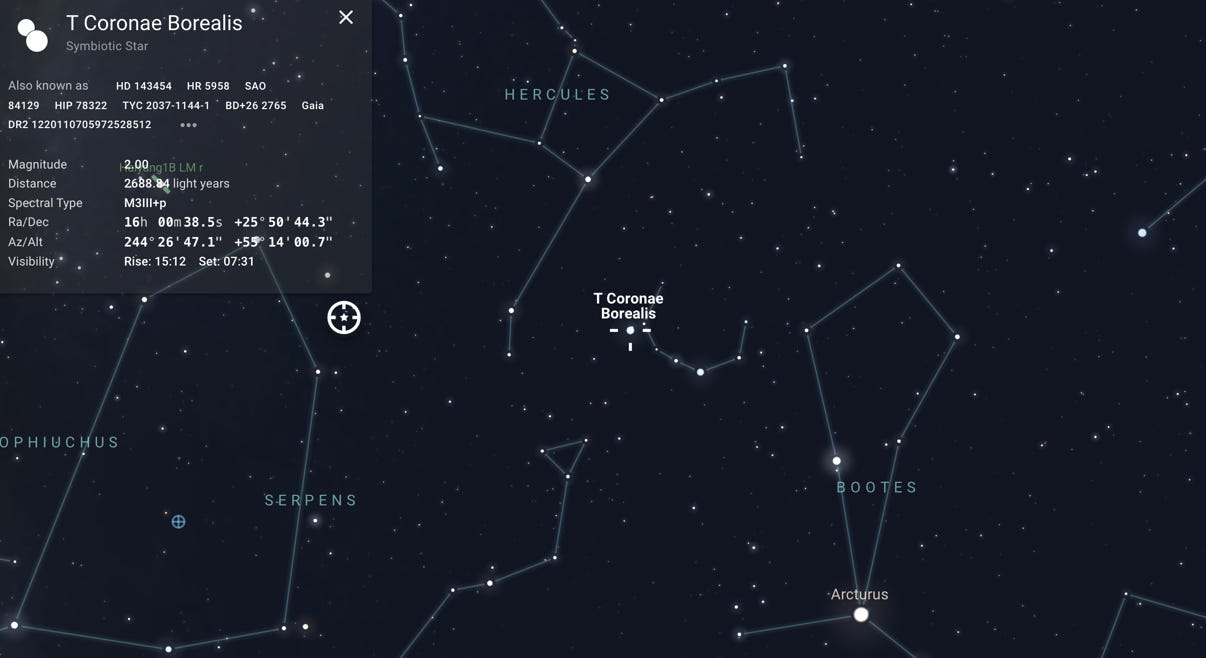
Predictive models are flashing red for late June. T Coronae Borealis, a recurrent nova, is due for its once-in-an-eighty-year thermonuclear eruption, set to leap from a practically invisible magnitude 10 to a naked-eye magnitude 2. Make the Corona Borealis arc your very first slewing target every single clear night. If you spot a “new star” next to Alphecca, sound the alarm instantly in the DwarfVision Discord so our network can jump on it.
June 27: The Unpredictable June Bootids
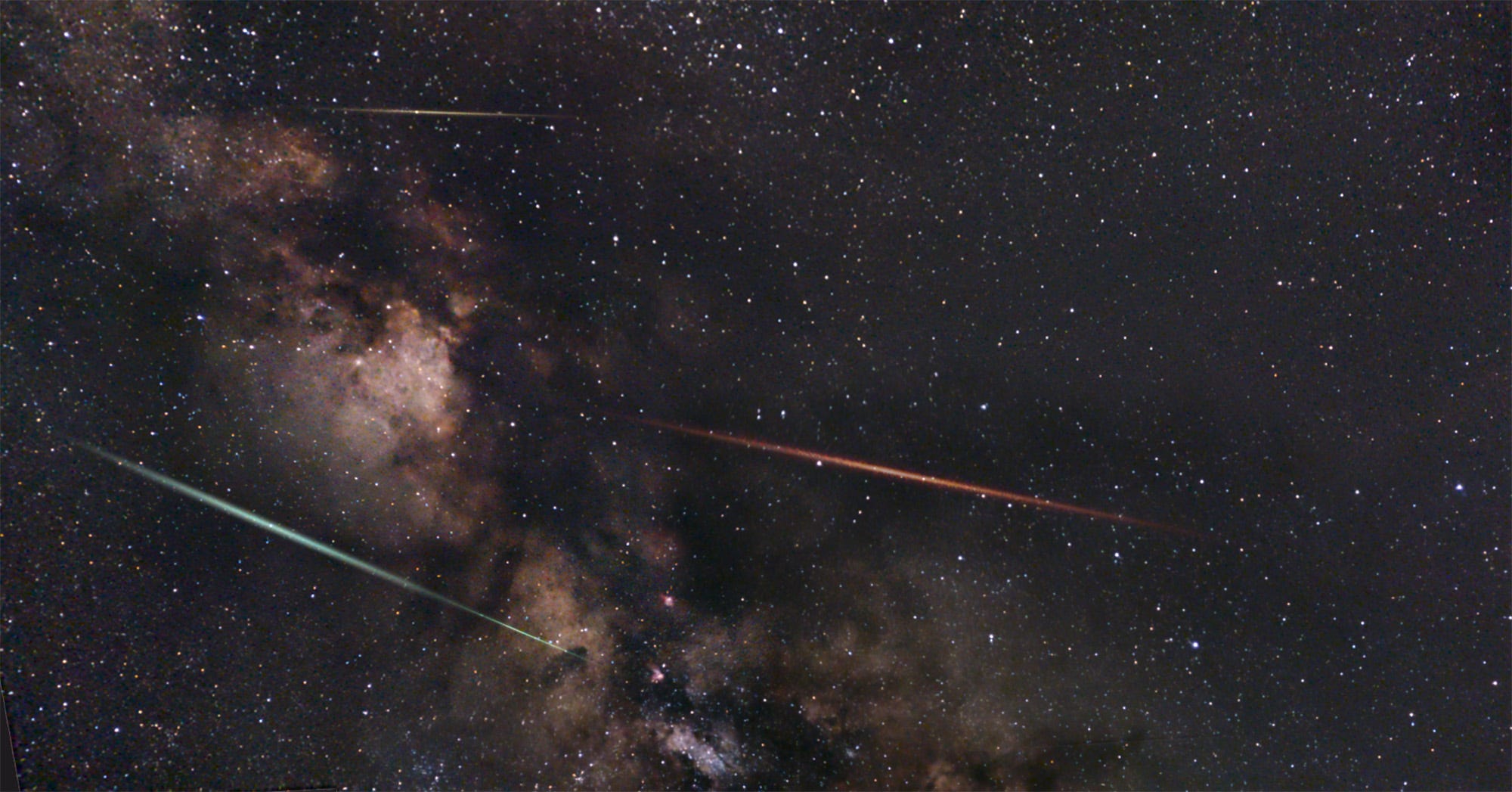
This is a classic wildcard meteor shower known for sudden, historic outbursts of bright, exceptionally slow-moving shooting stars. This is a pure Wide View overnight play. Point your Dwarf straight up towards the constellation Bootes, run a continuous interval timelapse (15 sec exp - 60 gain) while you sleep, or stay up and use the Milky Way mode and watch and wait, when a bright meteor streaks across the frame, stop the capture, and you've got a lucky shot, like ours above (yes, we emphasized the colors :)
Note: if you point your scope at the Milky Way just east of Bootes, you will score at least an impressive Milky Way shot, with luck, a few shooting stars too :)
June 27–30: Mars Meets the Seven Sisters
Set your alarm for 90 minutes before dawn. In the eastern sky, the fiery red disk of Mars will pass within 5 degrees of the icy blue nebulosity of the Pleiades (M45). Use your Wide View with the Astro Filter (D3 & mini) to balance out the twilight.
To capture this close pass, use the Milky Way mode again - Mars will not get so close to be in the same telephoto view as the sisters.
June 29th: the Full Moon in the Teapot

Don’t miss one of the most spectacular and southerly moons of the year as the full moon rises low in the southeast, centered in Sagittarius, and barely rises to 20° in the northern skies. Down under, it’s the opposite: the moon will rise to midheaven, riding high like the sun in December!
June 30: The Double-Feature Comet 10P/Tempel & The Saturn Nebula
This is our “Shot of the Month” contender. In the pre-dawn sky, Comet 10P/Tempel 2—actively brightening past magnitude 10.3 toward magnitude 8—will glide just 1 degree away from the vibrant planetary Saturn Nebula (NGC 7009). Use your Teleview to capture two entirely different epochs of cosmic evolution in a single frame: the primordial ice of a comet drifting past the dying gasp of a star.
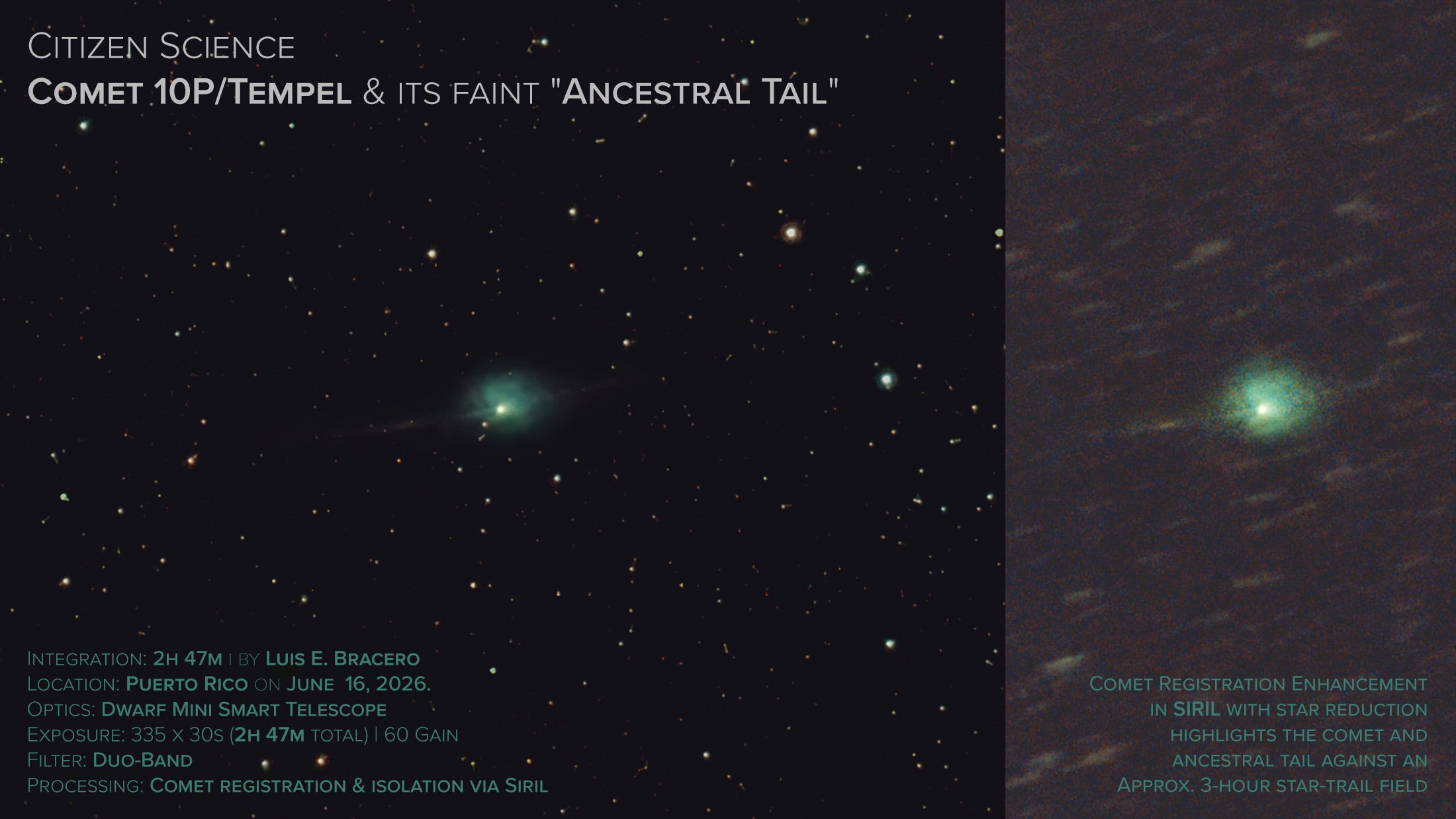
We must highlight a phenomenal Citizen Science capture by Luis E. Bracero using his Dwarf Mini, beautifully documenting the comet and its exceedingly faint "ancestral tail". Luis utilized a 2 hr, 47-minute capture in Duo-Band. We then processed his data using SIRIL's comet registration to separate the moving icy nucleus and its historical dust trail from the background starfield. Not only did this reveal the comet's coma halo, but also a portion of the tail to the left and right of the comet's motion, a leftover debris trail from its many orbits around our star.

Citizen Science Triumph: Pulling SN 2026gwx From the Static
This is exactly what community collaboration looks like! Luis E. Bracero and I were chasing the newly erupted Supernova SN 2026gwx in the galaxy NGC 3689—a tiny target 147 million light-years away. At a brutal magnitude of 16.4, our individual DWARF mini sessions couldn’t resolve the signal from the background thermal noise.
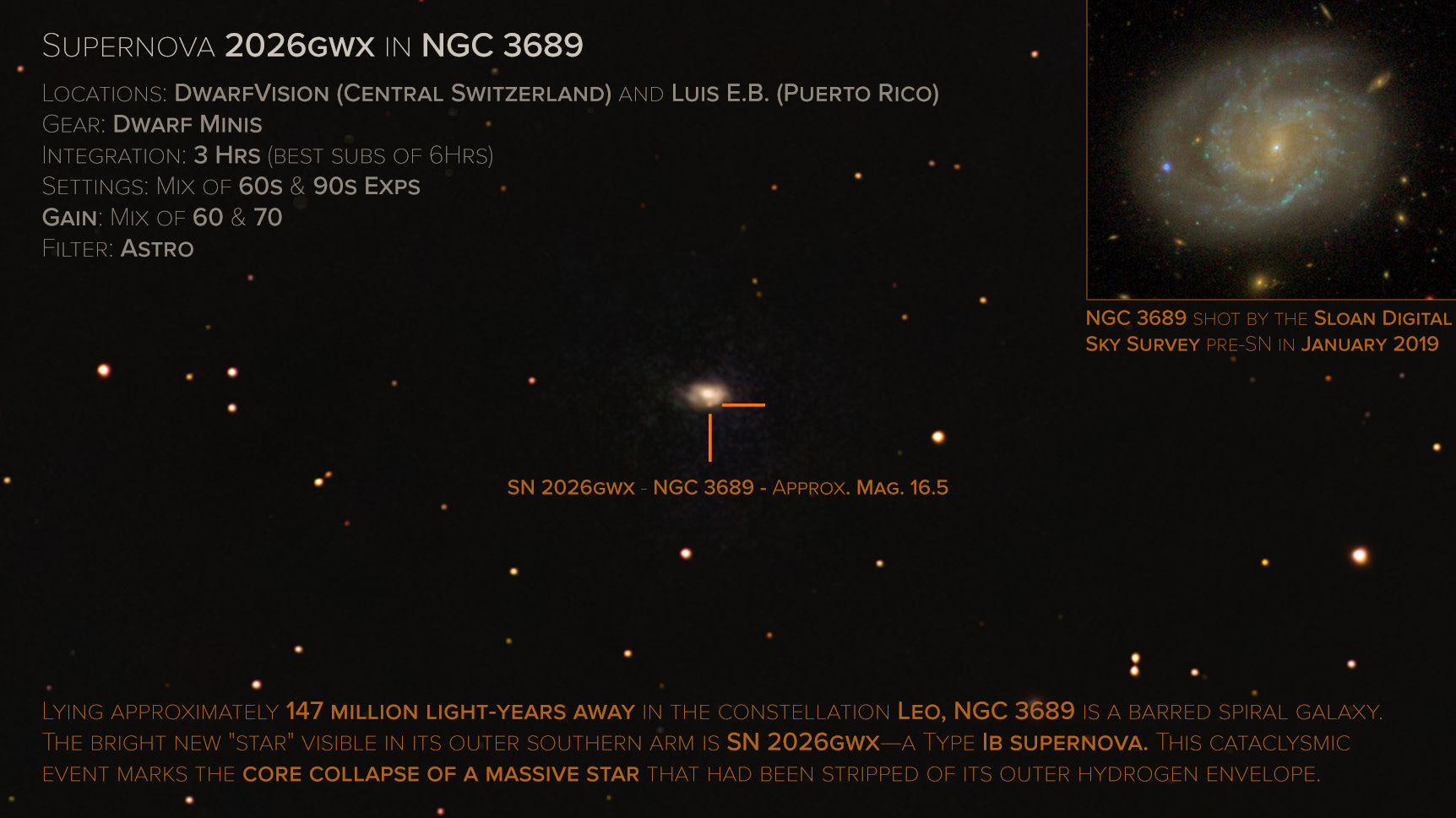
Instead of admitting defeat, we combined forces. Using SIRIL, we stacked the best subs from over 6 hours of DWARF Mini data collected across several nights and successfully lifted a tiny, triumphant bump of light from the noise floor.
Interestingly, the supernova type evolved right before our eyes. Originally classified as a Type Ia white dwarf detonation, follow-up spectral observations revealed no silicon. It was reclassified as a Type Ib—the catastrophic core-collapse of a massive, stripped supergiant.
Got a Citizen Science project? Ping DwarfVision and leave the processing and science to us!
Duncan Pond here or on Facebook!
Scope Corner: Gear Up!

Don’t have a DWARF yet, or looking to upgrade to a mini (Yes, it is an upgrade :) - use our links please!
Our Affiliate Links:
DWARF mini: The pocket-sized, quickly deployed powerhouse and precision detail, artist.
DWARF 3: The ultimate wide-field 4K deep diver.
Next up on DwarfVision…
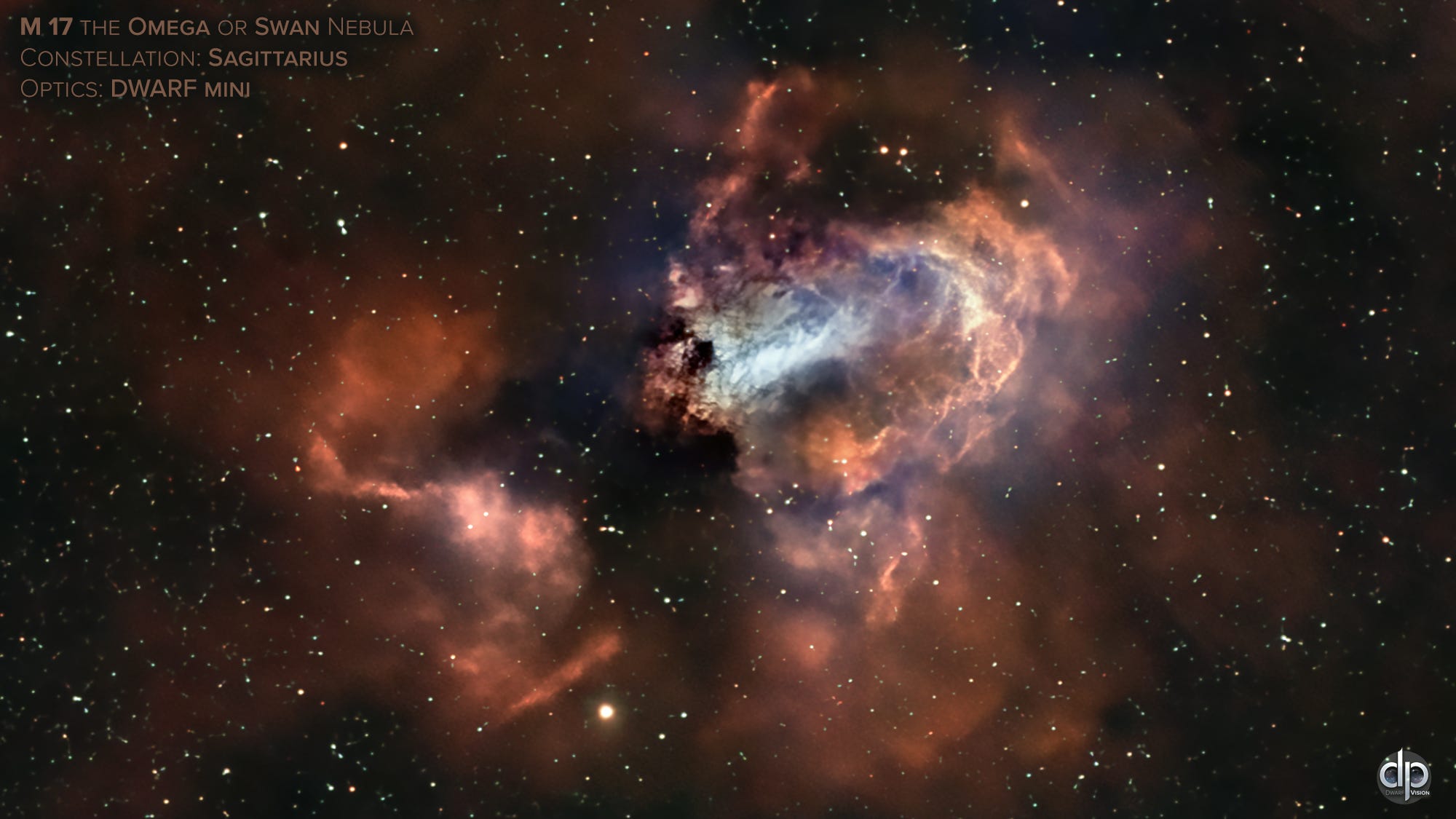
The Omega Nebula Processing Secrets & DATACLUB Drop
DwarfVision DSO of the WEEK: M 17
Coming soon in our mid-week Newsletter, we will look at the processing challenges of one of the summer’s most iconic targets: the Omega Nebula (M 17).
We will cover the specific challenges of this deep-sky gem:
We will dive into the SHO Color (Sulfur, Hydrogen, Oxygen) Palette. We will show you exactly how to achieve that rich, deep-space Hubble look in Affinity and Photoshop with or without SIRIL and no cheating! That means absolutely no artificial coloring, just simple color adjustments with masks.
will tackle our High Dynamic Range (HDR) processing strategy, focusing on taming the intensely bright core to prevent “burnout” while simultaneously preserving the faint, sprawling outer tendrils of the whole nebula.
We'll review the existing sharpening tools, both paid and free (though free options are limited), assess their effectiveness, and explore ways to improve your DWARF shots to reach the sharpness of a 5K rig.
Don’t miss this drop! Subscribe to get it to your mailbox directly!
Where can I find an invite to the dwarf vision discord?