

Photons Across the Void: Sharing One Year of DWARFVISION Citizen Science
How a community of backyard hobbyists turned compact smart optics into a globally synchronized tracking network - and HOW YOU CAN PARTICIPATE!

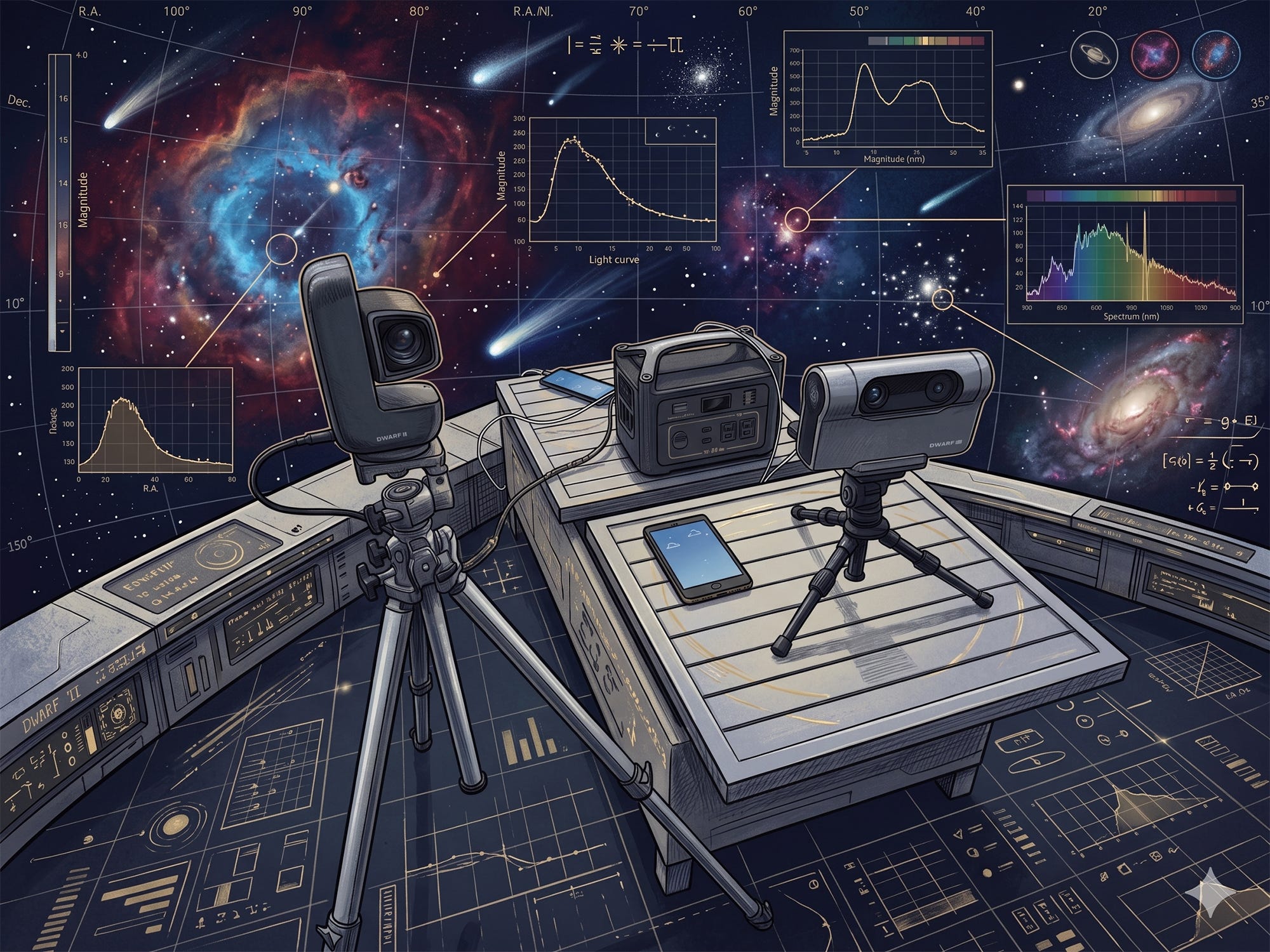
Consider the journey of a single photon.
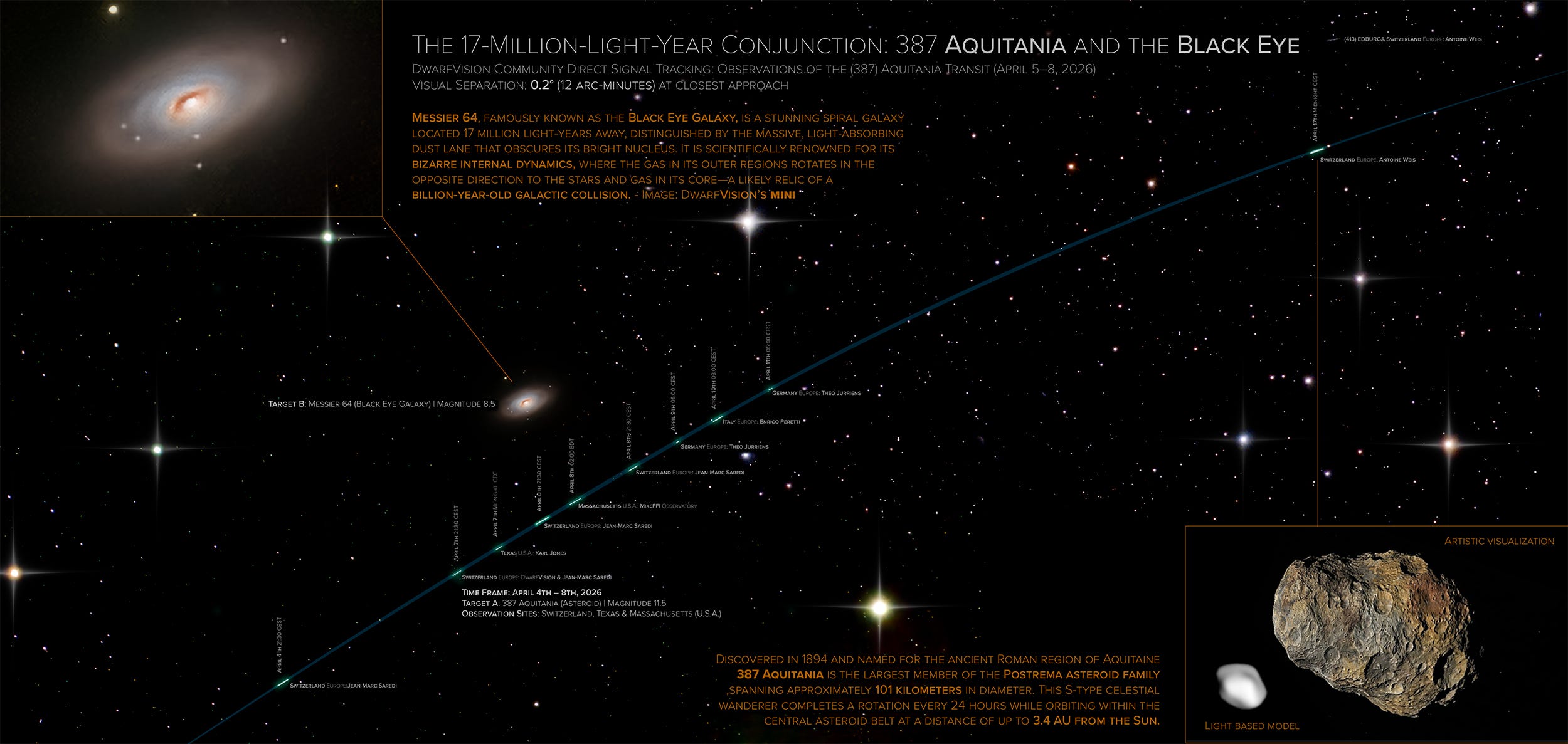
For 17 million years, a discrete packet of energy traveled through the freezing, near-absolute-zero intergalactic void, having escaped from stars at the edge of the Black Eye Galaxy’s inky heart. It crossed the abyss, slipped past the outer planets of our solar system, pierced our turbulent atmosphere, and ended its ancient journey last Tuesday—landing quietly on the digital sensor of a tissue-box-sized scope on a patio table in Texas.
To capture that 17-million-year-old light is a profound act of observation. But to simultaneously track a 100-kilometer chunk of local space rock—Asteroid (387) Aquitania—drifting almost directly across that ancient galactic canvas, noting its position night after night, is something else entirely. It is participation in the concert of light in our own universe.
We are not passive observers standing on a static platform or tripod! We are passengers on a planetary ship moving at tens of thousands of miles per hour, looking out through a dynamic, ever-changing cosmic shooting gallery, where we can observe and participate like never before.
As DwarfVision marks its one-year anniversary, we realize we haven't just been taking pictures—we’ve built a globally synchronized citizen-science observatory.
Help us expand our CREW network of collective observation by using the “Share” button or the referral link below. Whether you share it via text, email, or social media, you’ll earn credit for every new subscriber who joins our mission to look up and map the cosmos.
From Binocular Simplicity to a Global Network
There was a time when capturing an asteroid transit, tracking a newly exploded supernova, or resolving the ion tail of a comet required an entire observatory dome, a massive pier-mounted tracking rig, and hours of complex polar alignment. Today, we are witnessing a quiet revolution.
We have entered an era in which compact, smart telescopes—devices almost as easy to deploy as a pair of binoculars—can function as a globally distributed network of scientific instruments. By pooling our light nets across time zones, the DwarfVision community has evolved from casual astrophotography hobbyists into an active, synchronized citizen science engine.
The Sentinel Project - HOW TO PARTICIPATE
Next time you see a little luminous line in your scope-stack, you may have just captured an interloper.
Process it as much as you like in Stellar Studio, be sure you don’t lose the little invader!
Post your timestamped image in the DwarfLab Facebook Groups, then mention @Dwarfvision, or mention DwarfVision here on Substack.
We will collect your shot and let you know we have it. Your observations will be collected and recorded in a new Sentinel community project. We will share each collective capture series with the whole community and post it to our Sentinel archive.
Don’t just do lone “sessions”; collaborate, verify, and document the raw physical reality of the universe with your community!
The Cosmic Ledger: A Year of Taming the Void
Have a look at the forensic feat the Dwarf community has documented over the past few seasons by simply pointing small-aperture lenses at the dark:
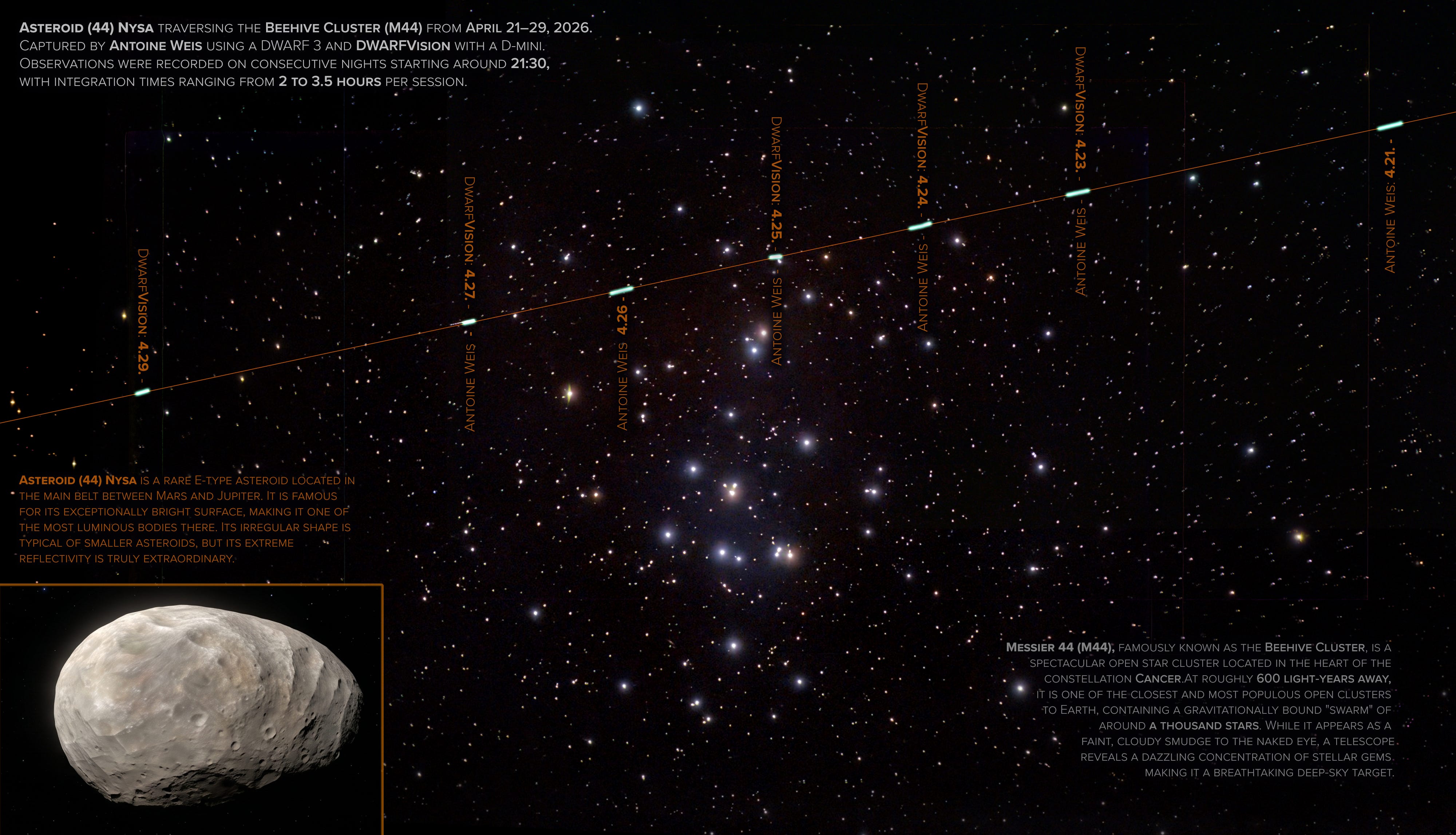
The Nysa-Beehive Transit (April 21–29, 2026)
The Network: Citizen scientists Antoine Weis and DwarfVision’s Duncan Pond pooled their tracking data using DWARF 3 and DWARF Mini scopes.
The Awe: Utilizing precise integration times ranging from 2 h, 0 m, 0 sec to 3 h, 30 m, 0 sec per session, we mapped the highly reflective E-type asteroid’s path directly across the ancient stellar nursery of M44, mapping the dynamic geometry of our solar system with undeniable precision.
The one that started it all! Now renewed with a galactic refresh of additional photons, the (8) Flora transit of the Hamburger galaxy and its graceful arc past the whole triplet grouping:
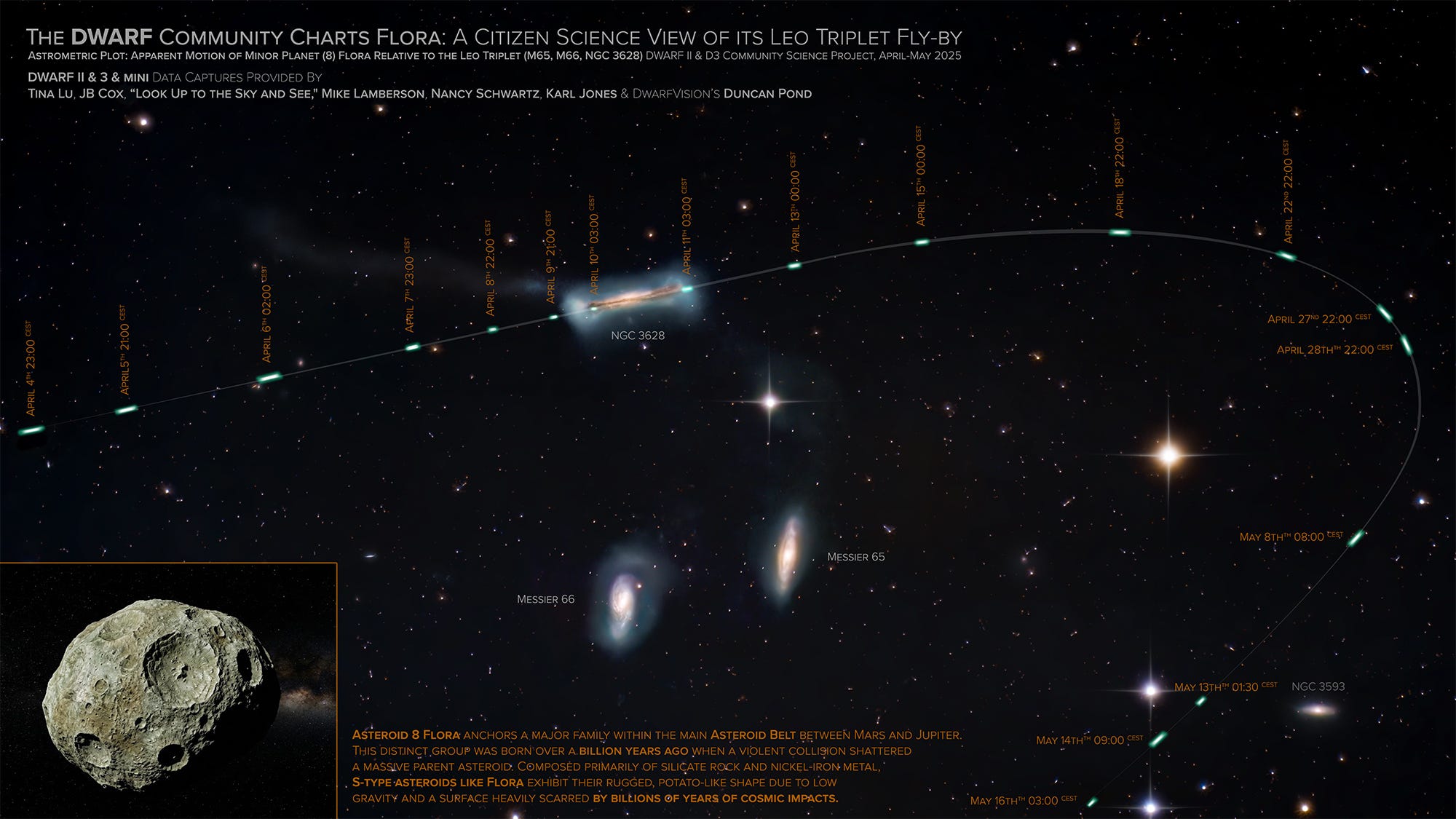
The Flora-Leo Triplet Flyby (April & May 2025)
The Network: Over a monumental month-and-a-half-long campaign, seven citizen scientists—Tina Liu, JB Cox, “Look Up To The Sky And See,” Mike Lamberson, Nancy Schwartz, Karl Jones, and DwarfVision—pooled their data to map an incredible deep-space transit.
The Awe: We beautifully juxtaposed the rapid, arcing movement of (8) Flora—a rugged, billion-year-old asteroid in our local solar system—against the ancient, 35-million-light-year-old starlight of the Leo Triplet.
To push this beyond a simple transit, we updated the background galaxy images with an additional 10 hours of Astro filter data and 5 hours of DuoBand filter data. Bringing the total integration time to over 20 hours, including photons captured by Tina Liu’s Dwarf 3.
We established a true “deep field” for this famous triplet. This extreme depth successfully revealed the elusive long tidal tail on the Hamburger Galaxy (NGC 3628), the extended outer halo on M66, and the ghostly wisps of Integrated Flux Nebula (IFN) near the star HD 98388, perfectly framing our local rocky wanderer against a profoundly deep cosmic architecture.
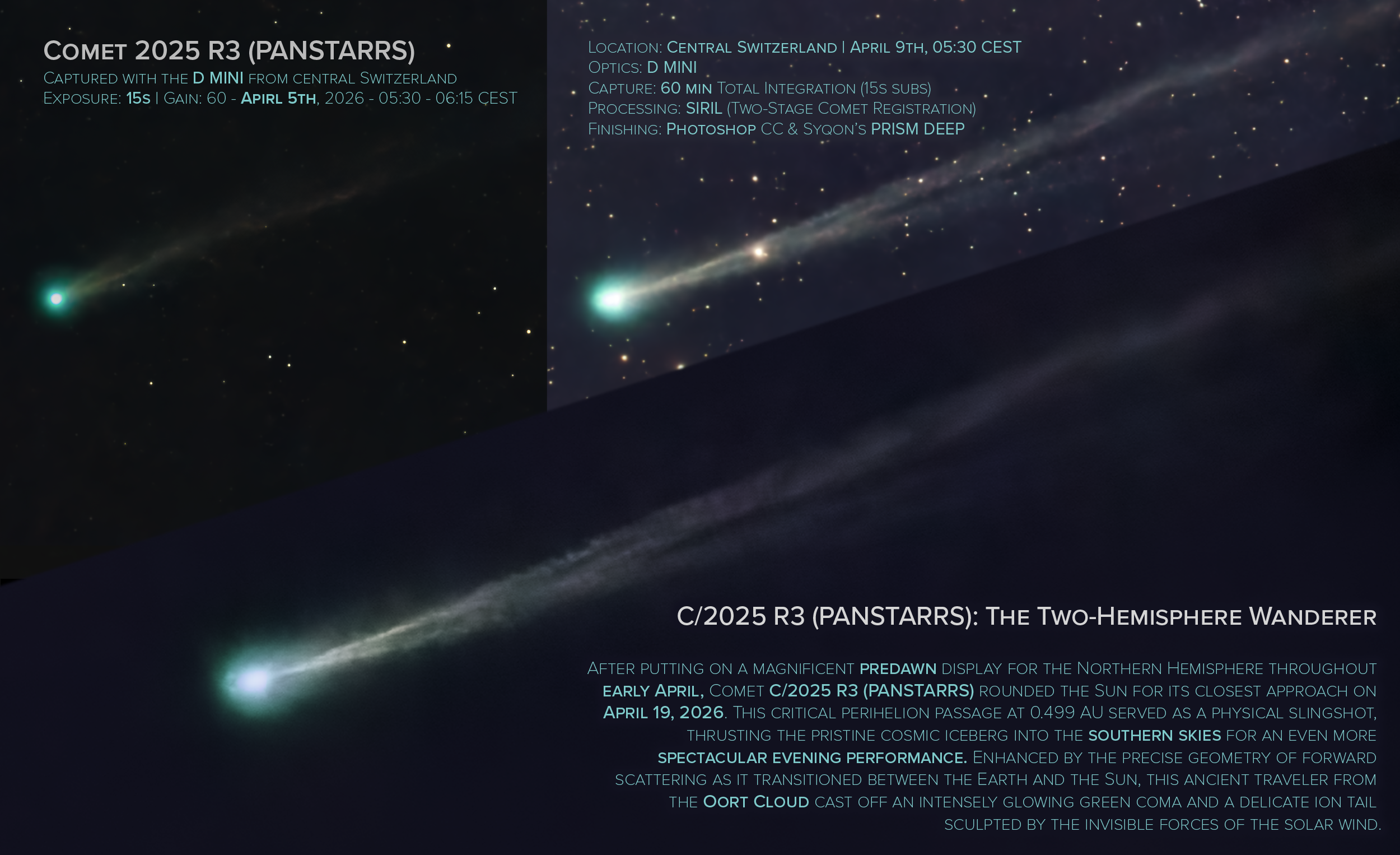
A Call to the CREW and Dwarf Communities: The Grand Mapping Continues
Whether we are freezing the icy comas of distant comets or mapping the grand spiral structures of the spring sky, this data belongs to the collective.
If a new Supernova is spotted, like SN 2026kid in the Knife Edge Galaxy back in April, you can rely on us to get you the news on these 1st - and even do your own transient check in our new DwarfVision Sentinel!
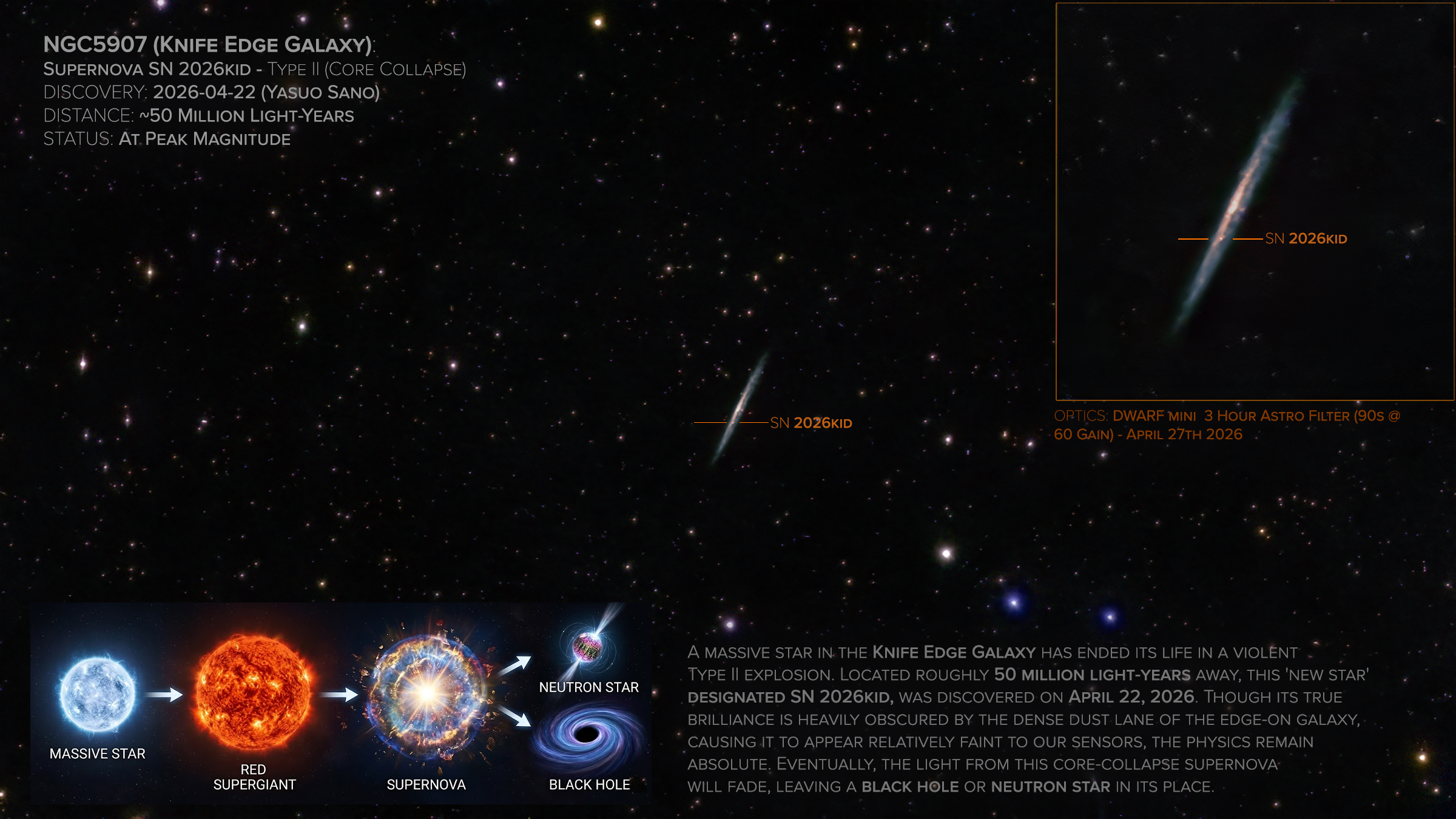
The DwarfVision Toolbox: Arming the Citizen Scientist
To ensure you never miss these fleeting cosmic events, we are integrating three permanent fixtures into our ecosystem to arm the community for Year Two. (Note: Clicking these tools will open them in a new browser tab).
The SkyGuide: Published directly here on Substack (button below) and on our site, consider this your primary mission briefing. It keeps you perpetually up-to-date on all Dwarf-specific celestial events, transient targets, and capture strategies. We keep you up to date on what’s up; you deploy the optics.
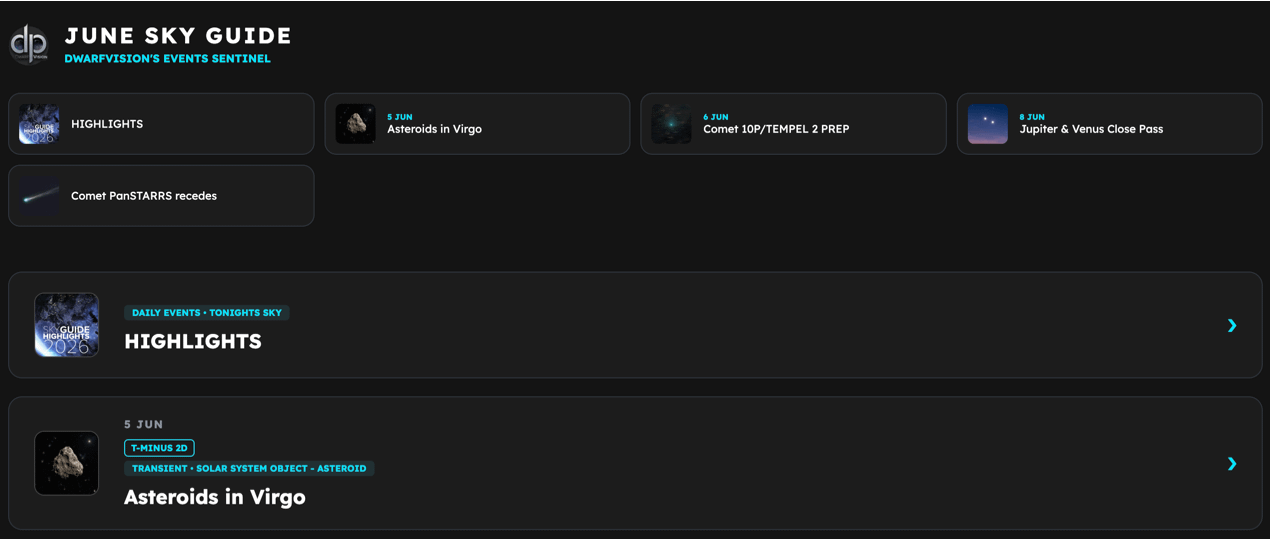
🚨 THE DWARF SENTINEL (NEW): Want to be the first human to capture the next 16th-magnitude supernova or an incoming comet? The Sentinel is our new live dashboard. It continuously scans astronomical databases for newly discovered transient events, delivering up-to-the-minute tracking data and custom coordinates vetted specifically for DWARF users.
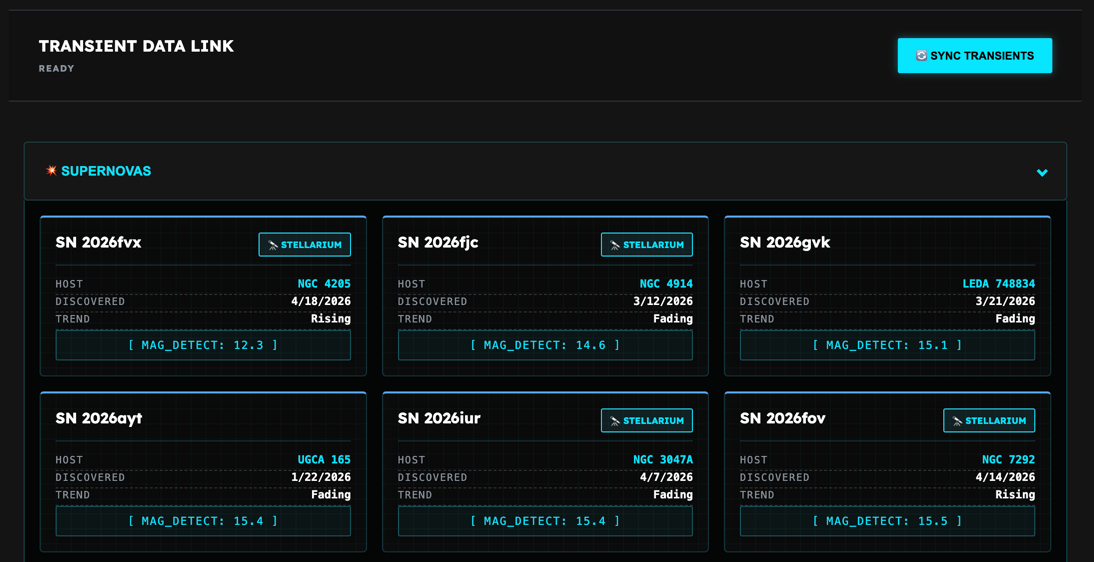
Our current FREE challenge is afoot (GALAXY SEASON)!
Participation in our Citizen Science projects and Challenges is always absolutely free!
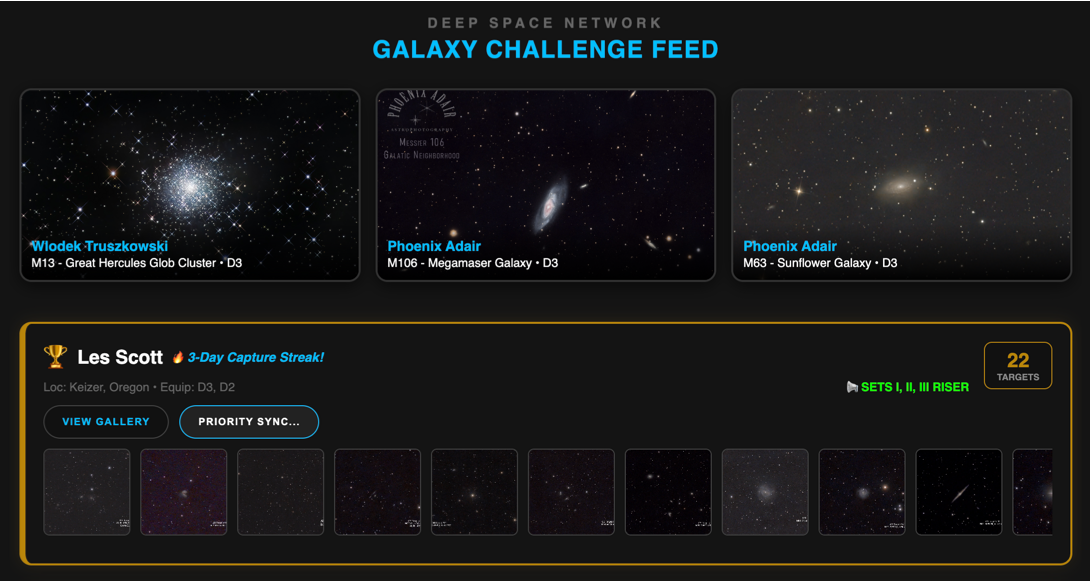
Our ongoing Galaxy Season Challenge is roaring ahead through June 30th, 2026. Hundreds of you are currently out under the stars, gathering photons from ancient targets like M13, M106, and M63.
The “No Post, No Fame” Reminder: To ensure your data is parsed cleanly into our daily live tracking system and to see your name stamped on the official Leaderboard, you must submit your shots via the official Dwarflabs Facebook groups and mention @dwarfvision in your posts.
How does DwarfVision bring you all this, plus in-depth post-processing articles, videos, and data in our popular DATACLUB?
With your support!
Help us bring you even more great tools to support your Dwarf Scope adventures by upgrading your Subscription and joining our CREW! Your contribution directly supports our endeavor to share our splendid heavens.
Scope corner
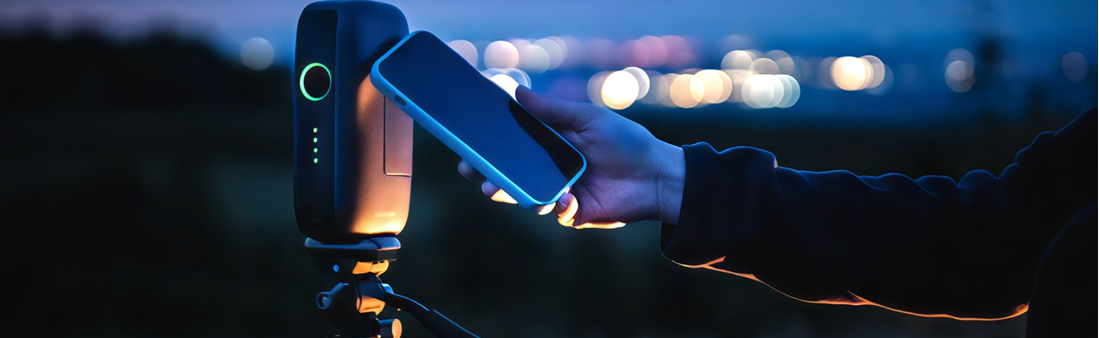
Don’t have a DWARF scope yet? Or looking for upgrading to the Small but powerful DWARF mini - then consider contributing to DwarfVision by purchasing your DWARF via our affiliate link:
Proud to be part of it and big thankyou to you Duncan for this excellent work :-)